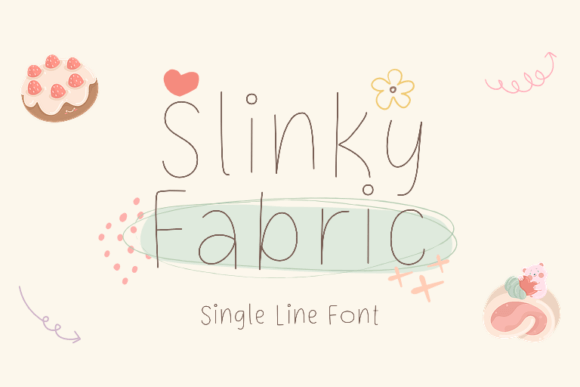
Slinky Fabric: A Versatile Font for Creative Expression
In the world of typography, finding a font that balances elegance with simplicity can be a challenge. Slinky Fabric offers a unique solution with its neat and casual single line design. This font is more than just a visual choice; it’s a tool that can enhance various creative projects across different mediums. Whether you're working on digital designs, crafting handmade items, or preparing presentations, Slinky Fabric provides a distinctive touch that stands out without overwhelming the viewer.
The appeal of Slinky Fabric lies in its ability to maintain clarity while adding a sense of playfulness. Its single line structure ensures that each character is easy to read, making it ideal for situations where legibility is crucial. At the same time, the font's casual nature gives it a relaxed vibe, perfect for projects that aim to convey warmth and approachability. This combination of features makes Slinky Fabric a go-to option for both personal and professional use.
Characteristics of Slinky Fabric
One of the most notable aspects of Slinky Fabric is its clean and uncluttered design. Unlike more ornate fonts that may distract from the message, Slinky Fabric focuses on simplicity. Each letter is designed with a consistent stroke width, creating a uniform appearance that enhances readability. This consistency also helps in maintaining a cohesive look across different applications, whether it's a logo, a poster, or a digital interface.
The font’s single line style means that there are no extra flourishes or embellishments to complicate the design. This minimalistic approach allows the text to blend seamlessly into a variety of backgrounds and color schemes. It’s particularly effective when used in conjunction with bold or vibrant colors, as it doesn’t compete with the other elements on the page. Instead, it complements them, ensuring that the overall composition remains balanced and visually appealing.
Another key feature of Slinky Fabric is its versatility. The font is available in multiple weights and styles, allowing users to adjust the level of emphasis based on their needs. For instance, a lighter weight might be suitable for body text, while a bolder version could be used for headings or titles. This flexibility makes it an excellent choice for designers who want to maintain a consistent visual identity across different projects.
Applications of Slinky Fabric
When it comes to practical applications, Slinky Fabric shines in a variety of contexts. In the realm of digital design, it can be used for web layouts, mobile interfaces, and graphic elements. Its clean lines make it well-suited for user interfaces where clarity is essential. Additionally, because it doesn't require a lot of space, it can be an efficient choice for projects that need to maximize screen real estate without sacrificing readability.
Crafters and DIY enthusiasts often find Slinky Fabric useful for creating personalized items such as greeting cards, invitations, and custom labels. The font’s casual aesthetic adds a friendly and inviting feel to these items, making them more appealing to recipients. When paired with hand-drawn illustrations or watercolor accents, Slinky Fabric can elevate the overall design, giving it a unique and artisanal quality.
For presenters and educators, Slinky Fabric offers a refreshing alternative to traditional fonts. It can be used in slides to add a touch of personality while keeping the content clear and focused. The font’s simplicity ensures that it doesn’t distract from the message being delivered, making it an effective choice for academic or professional settings. Moreover, its ease of reading makes it suitable for large audiences, even when displayed on screens or printed materials.
Considerations for Using Slinky Fabric
While Slinky Fabric has many advantages, it’s important to consider its limitations. The font’s minimalist design may not be appropriate for all types of content. For example, formal documents or legal texts may require a more traditional font to convey professionalism and authority. In such cases, Slinky Fabric might not be the best choice, as it could undermine the intended tone of the document.
Additionally, users should be mindful of how Slinky Fabric interacts with other design elements. While it works well with bold colors and simple backgrounds, it may not be as effective when used alongside complex graphics or intricate patterns. In these situations, the font could become lost in the overall design, reducing its impact and readability.
Another consideration is the availability of the font. Although Slinky Fabric is widely accessible through various design platforms, users should ensure that it is properly licensed for their intended use. This is especially important for commercial projects, where unauthorized use of a font can lead to legal issues. Checking the licensing terms before incorporating Slinky Fabric into a project is a crucial step that should not be overlooked.
Real-World Examples of Slinky Fabric
Many designers have successfully incorporated Slinky Fabric into their work, showcasing its adaptability across different industries. For instance, a small business owner might use the font for a website header to create a welcoming and modern look. The font’s clean appearance helps reinforce the brand’s image, making it more approachable to customers.
Similarly, a graphic designer working on a children’s book might choose Slinky Fabric for the title page. The font’s playful yet legible style aligns well with the target audience, making it an effective choice for engaging young readers. By using Slinky Fabric in this context, the designer can create a visual identity that resonates with the story’s theme and tone.
Even in more technical fields, such as architecture or engineering, Slinky Fabric can be used to enhance presentation materials. For example, a presentation on sustainable building practices might include a slide with the font used for key points, helping to draw attention to important information without disrupting the flow of the content.
Ultimately, the success of Slinky Fabric depends on how well it is integrated into the overall design. When used thoughtfully, it can add a unique and memorable element to any project. However, when overused or misapplied, it may fail to achieve the desired effect. Understanding the font’s strengths and limitations is key to leveraging its full potential in creative work.